
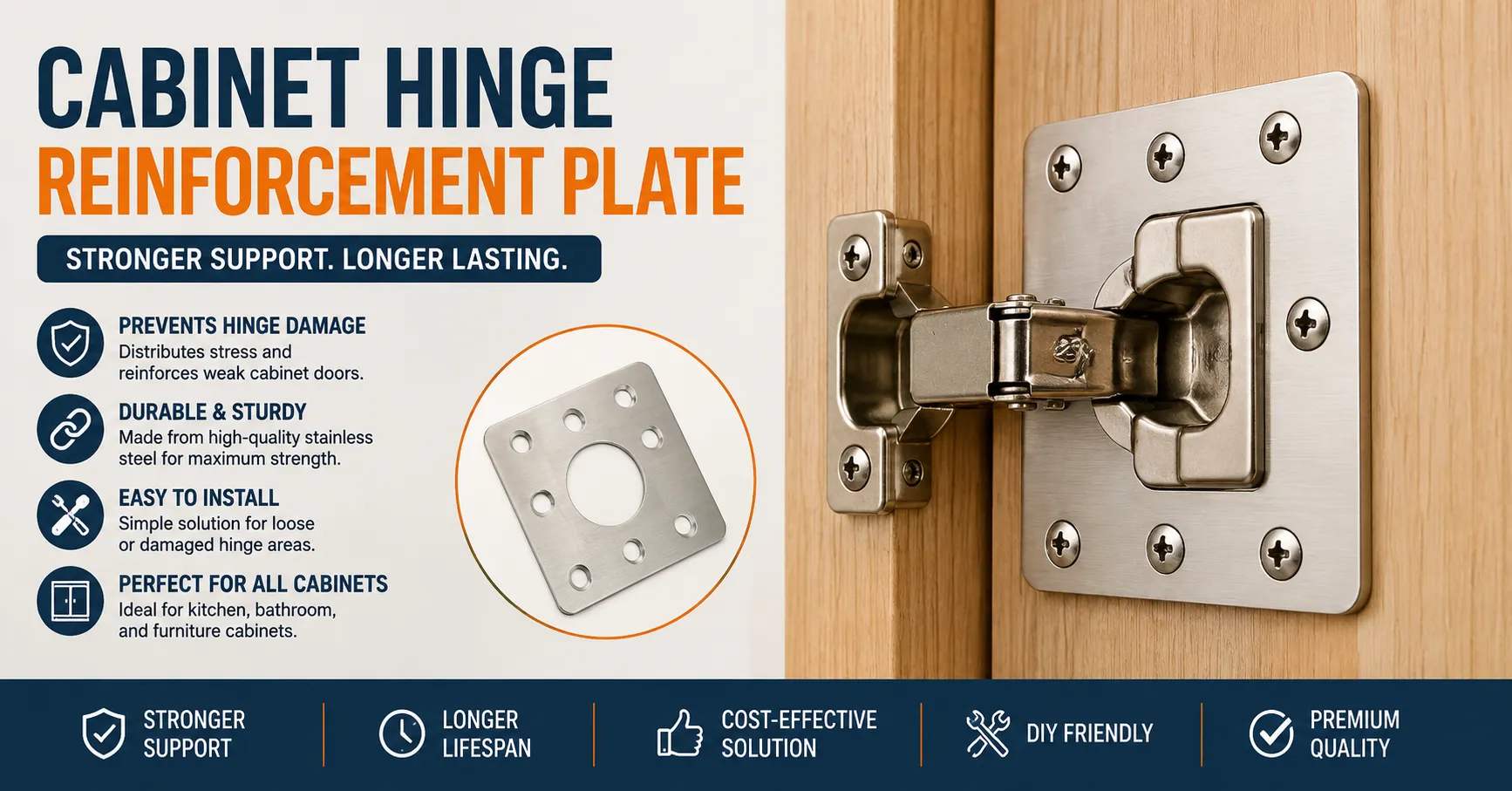
A damaged cabinet hinge mounting area does not always mean you need to replace the entire cabinet door. A cabinet hinge reinforcement plate can provide a practical way to strengthen stripped, cracked, or weakened areas where the hinge screws no longer hold securely. These metal plates spread the hinge load across a larger surface and can help restore a more stable connection.
Whether you are repairing a kitchen cabinet, wardrobe, cupboard, or furniture door, choosing the correct reinforcement plate requires more than simply matching the product name. You should check the hinge type, mounting-hole pattern, plate dimensions, screw size, and cabinet material before purchasing.
If your hinge repeatedly becomes loose, first identify the underlying problem. Our guide on cabinet hinge keeps coming loose can help you understand why the problem occurs and whether reinforcement is appropriate.
What Are You Replacing?
Before buying a cabinet hinge reinforcement plate, determine which part actually needs repair. In some cases, the hinge itself remains perfectly functional while the surrounding wood has become weak or the original screw holes have become enlarged.
A reinforcement plate is mainly useful when the hinge mounting area needs additional support. It can cover damaged screw holes and provide new mounting points for the hinge. However, if the hinge is bent, broken, or badly worn, replacing the hinge may be necessary.
Also check whether you need a door-side or cabinet-side repair plate. The correct option depends on where the damage occurred.
Measure the Existing Hardware
Accurate measurements make it much easier to select a compatible reinforcement plate.
Before ordering, remove the hinge if necessary and measure:
- Existing hinge dimensions
- Mounting-hole spacing
- Plate length and width
- Door thickness
- Cabinet panel thickness
- Distance from the cabinet edge
- Screw diameter and approximate length
- Concealed hinge cup diameter, if applicable
Take measurements in millimeters or inches and compare them directly with the manufacturer’s specifications.
Do not rely only on photographs because two similar-looking hinge repair plates can have completely different mounting-hole patterns.
Important Dimensions
The dimensions of a cabinet hinge reinforcement plate determine whether it will fit properly and provide adequate support.
Pay particular attention to the overall plate size and hole spacing. The plate should cover the damaged section without extending into areas that could interfere with the hinge or cabinet frame.
If you are repairing a concealed European hinge, measure the hinge cup as well. Many concealed cabinet hinges use a 35 mm cup, but this should always be confirmed with the existing hinge.
Also check the plate thickness. A thicker metal plate can provide a rigid reinforcement surface, but it must still fit properly without interfering with door alignment.
When comparing products, look for listings that clearly state dimensions, material, hole configuration, included screws, and intended hinge type.
How to Identify the Type
Before selecting a cabinet hinge reinforcement plate, identify the hinge installed on your cabinet.
Concealed Hinge
A concealed hinge remains mostly hidden when the cabinet door is closed. These hinges are common on modern kitchen cabinets and wardrobes.
European Hinge
European-style hinges are a common type of concealed hinge and typically use a circular cup installed into the back of the cabinet door.
Surface-Mount Hinge
Surface-mount hinges remain visible on the outside of the cabinet or door. Their reinforcement requirements can differ from concealed hinges.
Door-Side Repair
Some reinforcement plates are designed to repair the damaged area directly on the cabinet door.
Cabinet-Side Repair
Other plates reinforce the cabinet side or frame where the hinge mounting plate attaches.
If your cabinet uses a European-style concealed hinge, our article about a European hinge repair plate provides additional information about this repair method.
Compatibility Checklist
Before purchasing, compare the product specifications with your existing cabinet hardware.
- Hinge type matches the reinforcement plate
- Hinge cup diameter is compatible
- Screw-hole spacing matches
- Plate dimensions fit the damaged area
- Door thickness is suitable
- Cabinet panel thickness is suitable
- Screw length is appropriate
- Screw diameter is appropriate
- Plate does not interfere with hinge movement
- Mounting holes can be positioned securely
- The surrounding cabinet material is structurally sound
A product described as “universal” may fit many common cabinet hinges, but universal does not mean every cabinet. Always compare the manufacturer’s measurements with your hardware.
Replacement Options
You have several options when repairing a damaged cabinet hinge mounting point.
Replace the Existing Screws
If the wood remains solid and the holes are only slightly loose, replacing the screws with correctly sized hardware may solve the problem.
Install a Cabinet Hinge Reinforcement Plate
A reinforcement plate is a good option when the original mounting holes have become stripped or enlarged. The plate distributes the load over a larger area and provides additional mounting points.
Replace the Hinge
If the hinge itself is damaged, replacing it may be more appropriate than reinforcing the mounting area.
Replace the Damaged Cabinet Section
Severely broken or crumbling material may not provide enough strength for a reinforcement plate. In that situation, a more extensive woodworking repair may be necessary.
For a broader explanation of hinge repair plates, see our guide to a cabinet hinge repair plate.
Installation
Installing a cabinet hinge reinforcement plate does not usually require complicated tools, but careful positioning is important.
Step 1: Remove the Cabinet Door
Support the cabinet door while removing the hinge screws. Larger doors can be heavy, so avoid allowing the door to hang from a partially removed hinge.
Step 2: Remove the Hinge
Take the hinge away from the damaged mounting area and clean away loose wood fragments or debris.
Step 3: Position the Reinforcement Plate
Place the reinforcement plate over the damaged section. Make sure it completely covers the weakened mounting area while leaving sufficient clearance for the hinge.
Step 4: Mark the Mounting Holes
Use the plate’s holes to identify where the new screws will go. Make sure the selected holes reach solid cabinet material.
Step 5: Drill Pilot Holes
If required, drill appropriately sized pilot holes. Avoid drilling deeper or wider than necessary, especially in thin cabinet panels.
Step 6: Secure the Plate
Install the supplied or correctly sized screws. Tighten them firmly without overtightening, because excessive force can damage MDF, particleboard, or soft wood.
Step 7: Reinstall the Hinge
Attach the cabinet hinge to the reinforced area and reinstall the cabinet door.
Step 8: Adjust the Door
Open and close the door several times. Adjust the hinge until the door sits evenly and the gaps around it look consistent.
If your problem specifically involves a concealed hinge, you can also read our guide to a concealed hinge repair plate for additional repair considerations.
Common Compatibility Mistakes
Choosing a reinforcement plate based only on its product title is one of the most common mistakes.
Other problems include:
- Ignoring the hinge cup diameter
- Choosing the wrong hole pattern
- Using screws that are too long
- Using screws that are too short
- Selecting a plate that is too large
- Installing the plate too close to the cabinet edge
- Failing to measure the door thickness
- Assuming every “universal” plate fits every hinge
- Installing over severely damaged material
- Overtightening the mounting screws
- Forgetting to check door alignment after installation
A reinforcement plate cannot compensate for completely deteriorated cabinet material. If the surrounding wood has crumbled extensively, consider repairing the structural area before installing the plate.
Recommended Products
When choosing a cabinet hinge reinforcement plate, stainless-steel repair kits are a popular option for DIY cabinet repairs. Many kits include multiple plates and mounting screws, allowing you to repair more than one damaged hinge area.
For convenience, you can browse current Amazon options here:
Amazon – Cabinet Hinge Reinforcement Plate
When selecting a product from Amazon, compare:
- Plate material
- Plate thickness
- Overall dimensions
- Number of pieces
- Mounting-hole pattern
- Included screws
- Hinge compatibility
- Customer reviews
- Current availability
Because Amazon listings, sellers, prices, and stock can change, verify the specifications on the individual product page before purchasing.
If you are using Amazon Associates, replace the standard Amazon URL with your own affiliate-tagged product URL or the appropriate Amazon Associates linking tool.
FAQ
What is a cabinet hinge reinforcement plate?
A cabinet hinge reinforcement plate is a metal plate designed to strengthen a damaged or weakened hinge mounting area. It can provide a stronger surface for securing the hinge.
Can it fix a loose cabinet hinge?
Yes, if the main problem is stripped or enlarged screw holes. However, a damaged hinge or severely deteriorated cabinet panel may require a different repair.
Are reinforcement plates universal?
Not always. Some plates accommodate several common hinge configurations, but you should still compare dimensions and hole spacing before purchasing.
What material should I choose?
Stainless steel is a common choice because it offers strength and corrosion resistance. Check the manufacturer’s specifications for the exact product.
Can I use one on MDF?
A reinforcement plate can work with MDF when the surrounding material is still structurally sound. Severely damaged MDF may require additional repair.
Do I need to replace my hinge?
Not necessarily. If the hinge is still working correctly, reinforcement may allow you to reuse it.
Final Thoughts
A cabinet hinge reinforcement plate can be a simple and cost-effective solution for cabinet doors with stripped screw holes or weakened hinge mounting areas. Instead of replacing an otherwise usable door, the reinforcement plate can distribute the hinge load across a larger surface and provide fresh mounting points.
The most important step is measuring your existing hardware before purchasing. Check the hinge type, plate dimensions, mounting-hole pattern, screw size, door thickness, and cabinet material.
If you are ready to repair your cabinet, compare the available cabinet hinge repair plate options and choose a product that matches your specific hardware rather than relying solely on the word “universal.”