A cabinet hinge bracket is an important piece of hardware that connects or supports a cabinet hinge and helps keep the door properly positioned. Depending on the hinge system, the term can refer to a mounting bracket, mounting plate, repair plate, or reinforcement bracket. When this hardware becomes loose, bent, damaged, or incompatible with the hinge, the cabinet door may sag, shift, rub, or fail to close correctly. Before ordering a replacement, identify exactly what type of bracket you have and measure the existing hardware. Small differences in hole spacing, overlay, hinge style, or mounting configuration can make two similar-looking brackets incompatible. This guide explains what to replace, which measurements matter, how to identify the correct type, and how to install a replacement safely.
What Are You Replacing?
Before buying a cabinet hinge bracket, determine exactly which component is damaged.
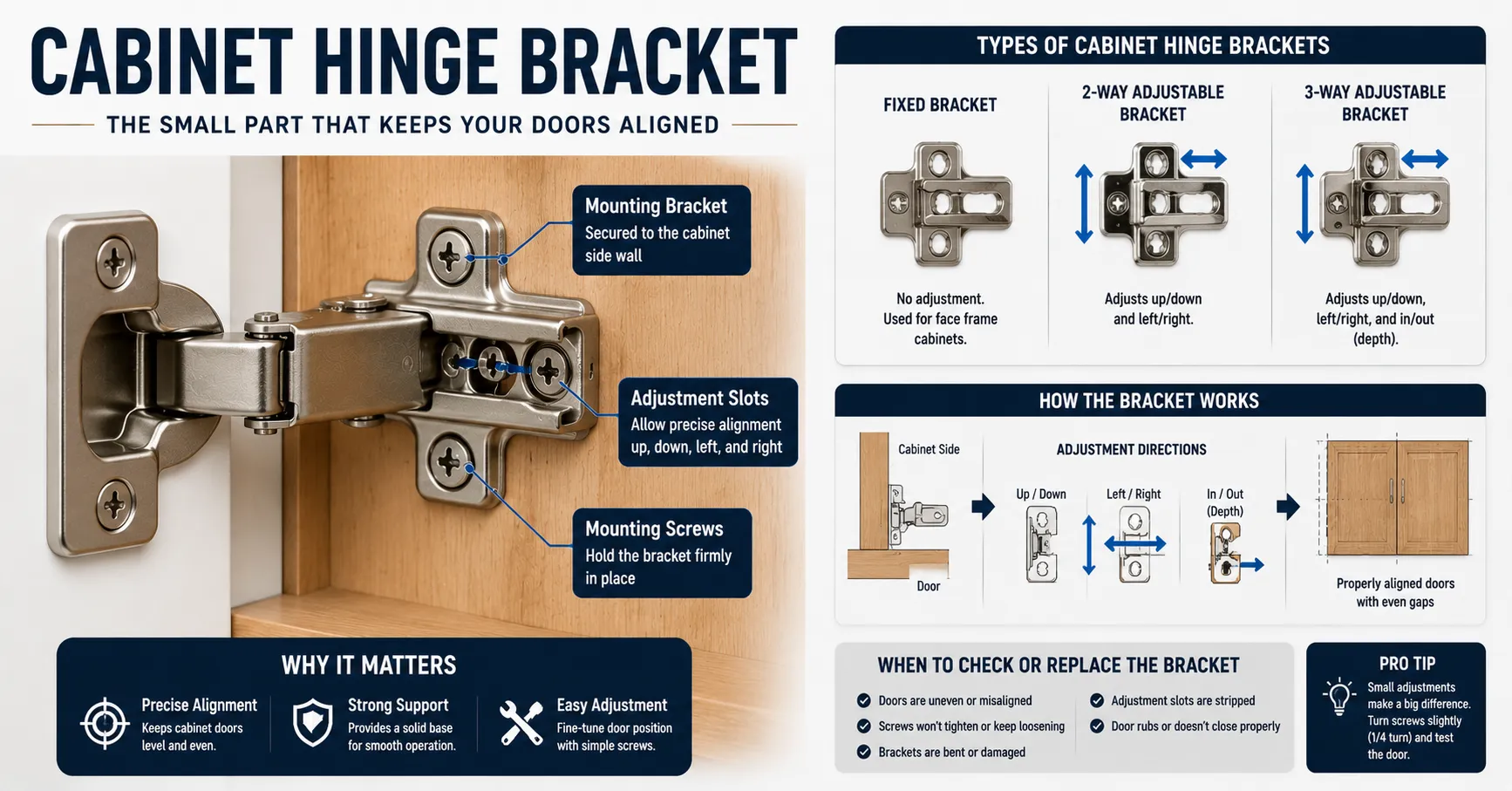
A cabinet hinge assembly can contain several separate parts, including the hinge itself, a mounting plate or bracket, screws, and sometimes a repair or reinforcement plate.
These components are not interchangeable simply because they look similar.
A mounting bracket or plate is normally designed to provide the connection point between the hinge and cabinet. A repair plate, on the other hand, is commonly used when the original mounting area has become damaged or the screw holes have stripped.
If your cabinet hinge keeps becoming loose, the underlying cabinet material may be the real problem. In that situation, replacing only the hinge may not provide a lasting fix. See our guide on why a cabinet hinge keeps coming loose before ordering replacement hardware.
Measure the Existing Hardware
The safest way to select a replacement is to measure the existing bracket before removing it.
Take clear photos from several angles and record the measurements.
If the bracket is still installed, measure it carefully without forcing the cabinet door.
Check:
- Overall length and width
- Mounting-hole spacing
- Screw-hole position
- Bracket thickness
- Hinge connection point
- Distance between mounting points
- Hinge cup dimensions when applicable
- Door thickness
- Cabinet overlay
Keep the original hardware until the replacement has been confirmed as compatible. It can serve as a useful reference if the new part looks slightly different.
Important Dimensions
Not every dimension has the same importance. Focus on measurements that determine whether the replacement can physically mount to the cabinet and connect to the hinge.
Mounting-Hole Spacing
Measure from the center of one mounting hole to the center of the next. Even a small difference can prevent proper installation.
Overall Size
Record the bracket’s length, width, and thickness. A replacement that is too large may interfere with the cabinet or hinge.
Overlay
Overlay determines how the cabinet door sits relative to the cabinet frame or box.
If you’re unfamiliar with this measurement, read our guide explaining what overlay means on a cabinet hinge.
Hinge Dimensions
For concealed hinges, also check the hinge cup diameter, cup depth, and position of the cup relative to the door edge.
Screw Size
The replacement bracket should accept appropriate screws for the cabinet material. Do not automatically assume that the screws included with one bracket are suitable for every cabinet.
How to Identify the Type
A cabinet hinge bracket can describe several different types of hardware.
Concealed Hinge Mounting Plate
This is commonly found with concealed European-style cabinet hinges. The mounting plate attaches to the cabinet and connects to the hinge mechanism.
European Hinge Repair Plate
A European hinge repair plate is generally intended to restore a damaged mounting area rather than simply replace a standard mounting plate.
Learn more about European hinge repair plates before choosing one.
Concealed Hinge Repair Plate
If the cabinet material around the hinge has failed, a concealed hinge repair plate may provide a larger and stronger mounting surface.
Reinforcement Plate
A reinforcement plate can help distribute the load across a larger section of cabinet material.
See our guide to cabinet hinge reinforcement plates for more information.
Repair Plate
A repair plate is intended to address damaged, stripped, or weakened hinge mounting areas. It is different from an ordinary hinge mounting bracket.
You can also see what a cabinet hinge repair plate looks like after installation.
Compatibility Checklist
Before purchasing a replacement cabinet hinge bracket, check the following:
- Is it designed for your hinge type?
- Does the mounting-hole pattern match?
- Is it compatible with a face-frame or frameless cabinet?
- Does the overlay match?
- Is the door thickness compatible?
- Are the bracket dimensions correct?
- Does the bracket connect to your hinge mechanism?
- Are the screw sizes appropriate?
- Can the cabinet material support the mounting screws?
- Is the hinge manufacturer or model relevant?
- Does the replacement provide adequate support for the door?
- Are you replacing a mounting bracket or repairing damaged cabinet material?
If you need a replacement because the original holes have become loose, consider whether a repair plate is more appropriate than another standard bracket.
Replacement Options
There are several possible solutions depending on the condition of your cabinet.
1. Original Replacement Bracket
If the existing bracket is damaged but the cabinet material is still strong, replacing it with the same model or compatible hardware is usually the simplest option.
2. Compatible Mounting Plate
For concealed cabinet hinges, a compatible mounting plate may replace a damaged original plate.
3. Cabinet Hinge Repair Plate
If the original screw holes are stripped, a cabinet hinge repair plate may be a better solution.
4. Reinforcement Plate
For weakened cabinet material, a reinforcement plate can spread the mounting load across a larger area.
5. Specialty Hinge Hardware
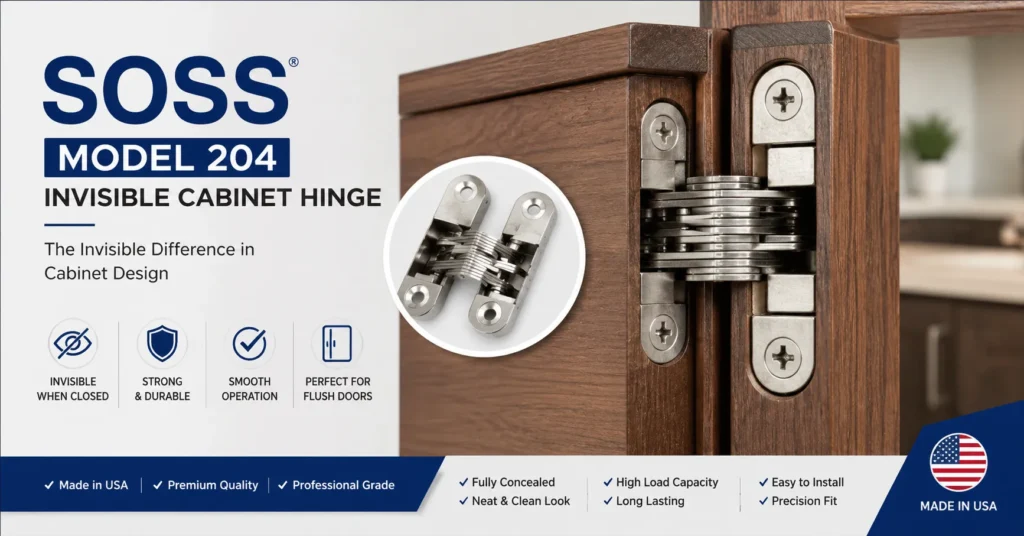
Some cabinets use unusual or invisible hinge systems. For example, an SOSS Model 204 invisible cabinet hinge uses a different installation concept from a typical concealed European hinge.
The replacement should match the original hardware system rather than simply being selected based on appearance.
Installation ↓
Once you’ve confirmed compatibility, installation is relatively straightforward for many replacement brackets.
Step 1: Remove the Old Hardware
Support the cabinet door and remove the screws holding the damaged bracket or plate.
For heavier doors, have another person support the door while you work.
Step 2: Inspect the Cabinet
Check the screw holes and surrounding material.
If the wood, MDF, or particleboard is cracked or badly damaged, installing another standard bracket into the same failed holes may not provide a durable repair.
Step 3: Compare the Replacement
Place the new bracket beside the old one.
Compare:
- Hole positions
- Dimensions
- Thickness
- Hinge connection
- Mounting orientation
Step 4: Position the Bracket
Place the bracket in the correct location.
Do not rely solely on the old screw marks if the cabinet material has shifted or been damaged.
Step 5: Install the Screws
Install the appropriate screws and tighten them securely.
Avoid excessive force, especially in particleboard or MDF, because overtightening can damage the mounting material.
Step 6: Attach the Hinge
Connect the hinge to the bracket according to the hinge manufacturer’s design.
Step 7: Test the Door
Open and close the door several times.
Check for:
- Sagging
- Rubbing
- Uneven gaps
- Excessive movement
- Poor closing
- Loose hardware
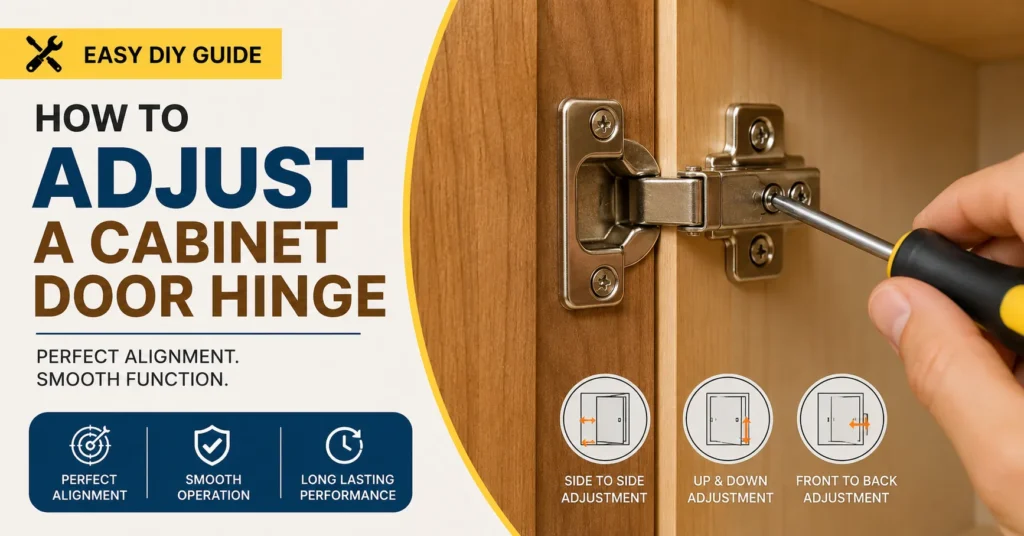
If alignment needs correction, follow our guide on how to adjust a cabinet door hinge.
Common Compatibility Mistakes
Buying by Appearance Alone
Two brackets can look nearly identical while having different mounting-hole patterns.
Confusing a Repair Plate With a Mounting Plate
These parts can serve completely different purposes. A repair plate is generally intended to reinforce or restore damaged mounting material.
Ignoring Overlay
Incorrect overlay can cause alignment and door-position problems.
Using the Wrong Screws
The wrong screw length or diameter can prevent proper attachment or damage the cabinet.
Ignoring Cabinet Construction
Face-frame and frameless cabinets may require different hinge hardware.
Installing Into Damaged Material
If the cabinet material around the hinge is already failing, another standard screw installation may not solve the problem.
Assuming Everything Is Universal
There is no guarantee that a generic cabinet hinge bracket will fit every hinge system.
Recommended Products
If you are looking for a replacement cabinet hinge bracket, compare products based on the exact dimensions and hinge system rather than choosing solely from the product title.
Browse Cabinet Hinge Brackets on Amazon
When comparing Amazon listings, check:
- Mounting-hole spacing
- Overall dimensions
- Hinge compatibility
- Material
- Screw size
- Quantity included
- Overlay compatibility
- Customer reviews
- Manufacturer specifications
If your cabinet has stripped or damaged hinge holes, search specifically for a cabinet hinge repair plate or hinge reinforcement plate rather than automatically buying another mounting bracket.
Amazon products, prices, sellers, and availability can change, so verify the specifications on the individual listing before ordering.
Final Thoughts
Choosing the right cabinet hinge bracket starts with identifying what component you actually need. A mounting bracket, concealed hinge mounting plate, repair plate, and reinforcement plate can look similar but serve different purposes. Measure the existing hardware, confirm the hinge type, check overlay and mounting-hole spacing, and inspect the cabinet material before purchasing. If the cabinet itself is damaged, a repair or reinforcement solution may be more appropriate than simply replacing the bracket. Taking a few minutes to verify compatibility can prevent another loose hinge, misaligned door, or failed repair.
FAQ
Q: What is a cabinet hinge bracket?
A : A cabinet hinge bracket is hardware used to mount or support a cabinet hinge. Depending on the system, it may refer to a mounting plate, bracket, repair plate, or reinforcement component.
Q: Are cabinet hinge brackets universal?
A : No. Brackets can differ in dimensions, hole patterns, hinge compatibility, overlay requirements, and mounting style.
Q: How do I measure a cabinet hinge bracket?
A : Measure its overall dimensions, mounting-hole spacing, thickness, screw-hole positions, and hinge connection points. Also check the cabinet’s overlay and door thickness where relevant.
Q: Is a repair plate the same as a hinge bracket?
A : No. A repair plate is generally designed to reinforce or restore a damaged mounting area, while a mounting bracket or plate is normally part of the hinge mounting system.
Q: Can a bracket fix stripped cabinet hinge holes?
A : A standard bracket may not fix damaged holes. A dedicated hinge repair or reinforcement plate can provide a larger mounting surface when compatible with the cabinet and hinge.
Q: Should I replace the whole hinge?
A : Not necessarily. If only the bracket is damaged, replacing the compatible bracket may be sufficient. If the hinge mechanism itself is bent, worn, or broken, replacing the hinge may be necessary.